
Last updated November 18, 2026
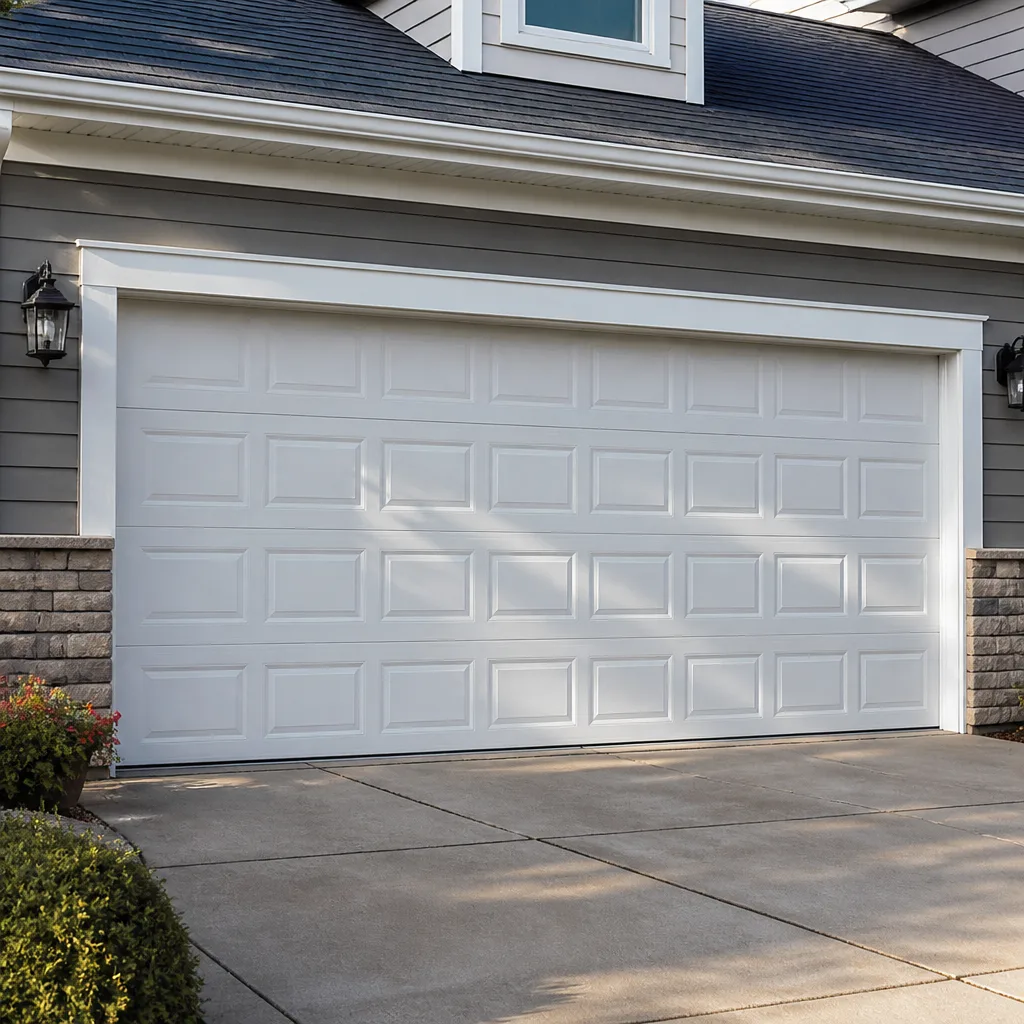 Raised-panel steel
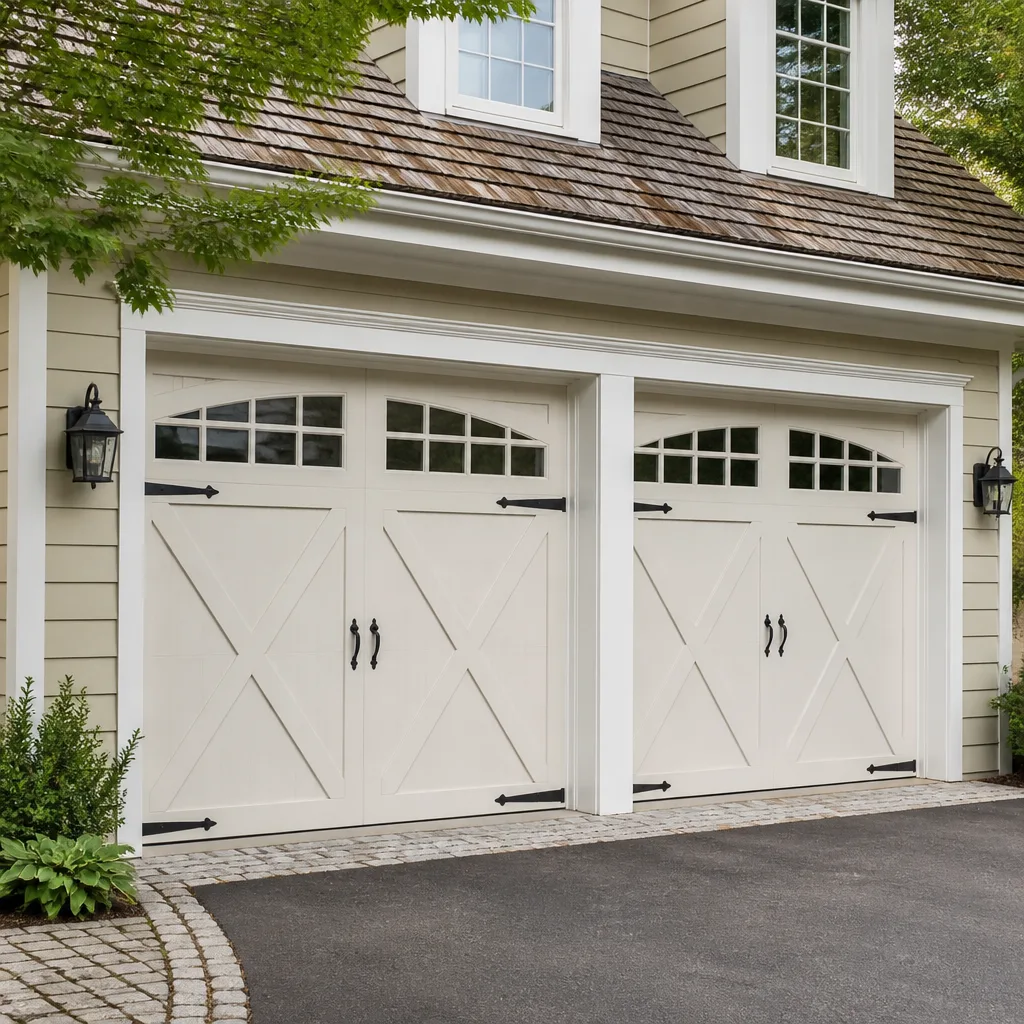 Carriage house
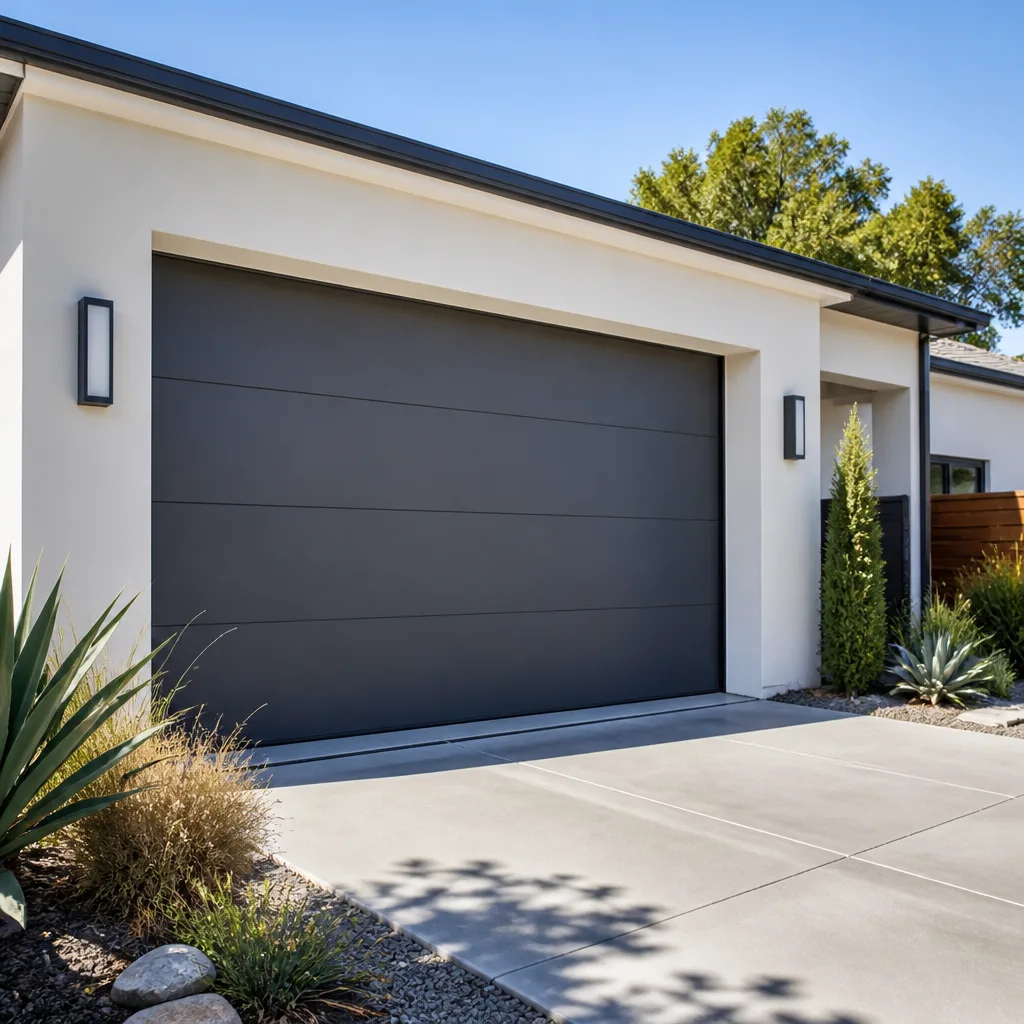 Modern flush
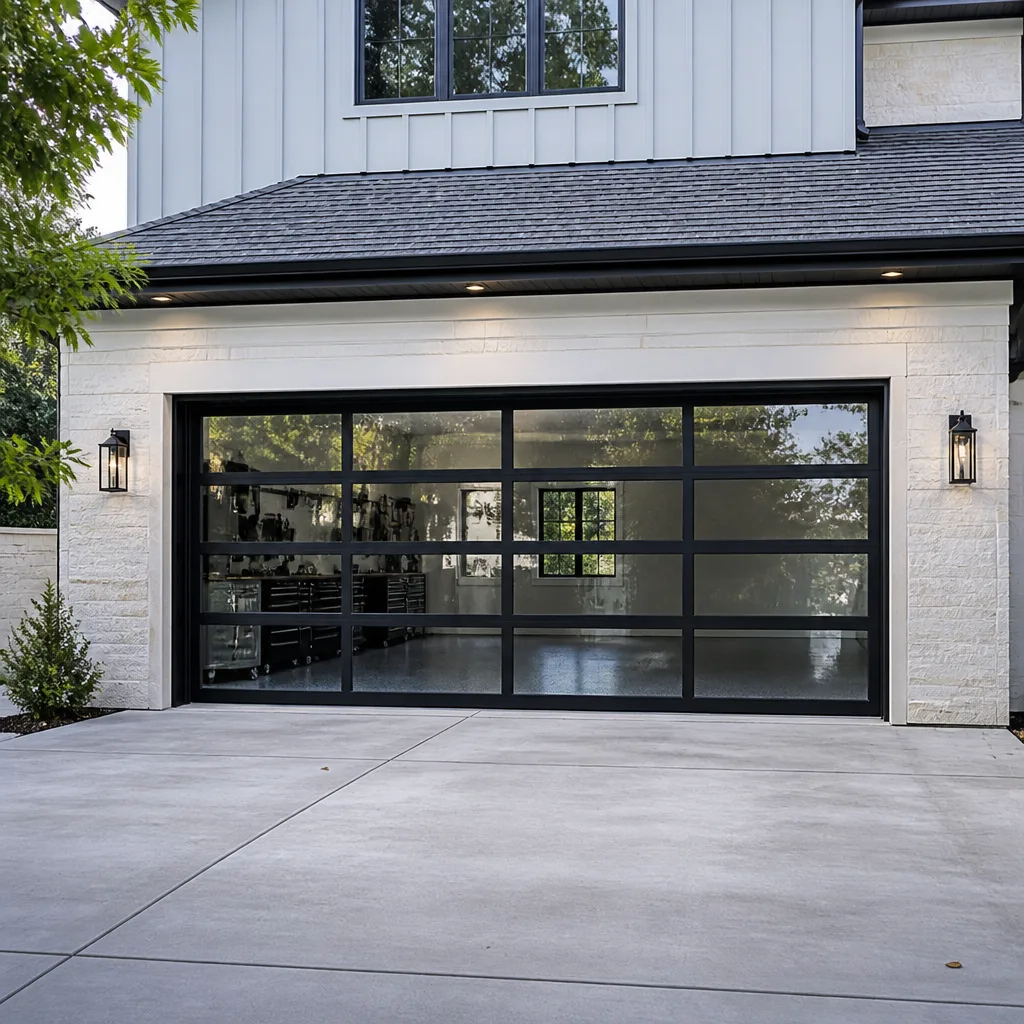 Full-view glass
 LiftMaster openers
 Chamberlain openers
Full 25-point door and opener safety check with every visit - springs, cables, rollers, tracks, and your LiftMaster or Chamberlain opener included
You get a price before we start. It does not change when the pro arrives.
Get your free estimateGarage Door Warning Signs: A Paradise Homeowner’s Reference Guide
A garage door that runs slow on a hot afternoon in Paradise isn’t necessarily failing, but a door that runs slow on a cool morning absolutely is. That single distinction escapes most homeowners, because the warning-sign checklists they find online were written for temperate climates with mild summers and regular rain. A desert door lives a different life. It expands and contracts through brutal thermal swings, takes relentless ultraviolet light, and collects fine dust in places a Midwest guide never mentions. This guide covers the signs that are universal, then the ones that are specific to homes here. You’ll learn how to separate heat-normal behavior from genuine mechanical wear, and how to spot the quiet safety failures that a still-working door can hide.
Quick Answer
In Paradise, the garage door warning signs that matter most are: a door that runs slowly or noisily on a cool morning (not a hot afternoon), visible cracking or chalking on panels and weather seals from sun exposure, dusty photo-eye lenses causing intermittent reversing, spring sounds or gaps that appear within a few seasons of thermal cycling, and a door that opens but no longer reverses when it should. Any of these means it’s time for a professional inspection, not a wait-and-see.
Styles & brands we work with
- Raised-panel steel
- Carriage house
- Modern flush
- Full-view glass
- LiftMaster openers
- Chamberlain openers
Table of Contents
- Heat-Normal vs. Heat-Abnormal Behavior
- UV Degradation: What Sun Damage Looks Like
- Dust and Photo-Eye Sensors: The Intermittent Reverse
- Spring Warning Signs in a Desert Climate
- When a Working Door Is Actually Dangerous
- Opener and Smart-Home Warning Signs
- Noise, Track, and Roller Clues
- A Seasonal Checklist for Paradise Homes
Heat-Normal vs. Heat-Abnormal Behavior
The most useful thing you can learn as a Paradise homeowner is to read your door against the thermometer. Metal expands in heat and contracts in cold. A steel door baking in afternoon sun will behave slightly differently than that same door at dawn. That’s normal. What isn’t normal is a door that struggles when the temperature is mild, because mild conditions remove the thermal excuse.
Here’s how to sort the two:
- Heat-normal: slightly slower travel, a faint change in sound, or a little more effort in the last few inches of closing on a hot afternoon. Things settle down as the day cools.
- Heat-abnormal: grinding, binding, or a door that stops partway regardless of temperature. A slow or strained door on a cool morning is a mechanical signal, not a thermal one.
- Always-abnormal: a door that reverses without reason, drops unevenly, or makes a bang or snap. These aren’t about heat at all.
We mention this first because it’s the source of two costly errors. Homeowners call for service on a perfectly healthy door that’s simply warm, and they ignore a genuinely worn door because they assume the stiffness is “just the heat.” Our technicians have up to 11 years of experience, and the first thing we do is ask when the problem shows up. That one question often tells us more than a visual inspection.
In Paradise, the daily temperature swing is wide enough that you can watch the effect yourself. If the door complains at 3pm and sails through at 7am, you’re likely looking at normal expansion. If it complains both times, it’s the door.
UV Degradation: What Sun Damage Looks Like
Sun is the slow hazard in this climate, and it attacks more than paint. Ultraviolet light breaks down the materials on your door that aren’t obvious at a glance. Because the damage happens gradually, homeowners adapt to it and stop noticing. The trick is knowing what to look for and where.
Check these four areas on a door that faces the sun:
- Panel finish. Look for chalking (a powdery film that wipes off white), fading, or fine surface cracks. Chalking means the topcoat is breaking down.
- Weather seals and the bottom threshold. Rubber and vinyl seals harden and crack under UV. A cracked bottom seal lets dust, heat, and pests in and can let the door close on an unseen obstruction.
- Cable sheathing. The protective coating on the lift cables can dry and split. Never touch a cable yourself, but you can look for visible cracking from a safe distance.
- Window inserts and trim. Plastic window panes cloud and yellow, and any plastic trim can become brittle.
Material matters here. Brands like Clopay and Amarr build doors with finishes designed to resist sun, but no finish lasts forever in a high-UV environment. When the finish goes, the substrate is next, and that’s when a repaint turns into a replacement. Catching UV wear early is one of the cheapest forms of door maintenance there is. If you’re already seeing cracked seals or a chalky finish, that’s a good moment to have a technician look at the whole system rather than just the cosmetics.
Dust and Photo-Eye Sensors: The Intermittent Reverse
If your door reverses for no apparent reason and then works fine the next time, dust is a likely suspect. The photo-eye sensors near the floor use an invisible beam to detect obstructions. In a dusty desert environment, a thin film of dust on either lens can scatter that beam just enough to trigger a false reversal. It happens intermittently, which is exactly what makes it confusing.
A genuine obstruction-sensor failure and a dusty-lens reversal look similar but aren’t the same. Here’s how to tell them apart:
- Dust: the door reverses only sometimes, often after a windy day or when the door hasn’t run in a while. The lens looks cloudy.
- Sensor failure: the door reverses every time, or the opener’s indicator light flashes a fault code. The problem is consistent.
- Alignment issue: the door reverses when nothing is in the way, and the two sensors don’t seem to be pointing at each other.
You can gently wipe the lenses clean with a soft cloth, which is safe and worth doing as routine upkeep. If the reversing continues after cleaning, don’t keep guessing. This is a safety circuit, and a sensor that fails to detect a real obstruction is a serious problem. If you’re not sure which of the three you’re facing, that’s when it’s worth having someone take a look. You can read more about how we handle these issues on our garage door opener repair page, since the sensors are wired into the opener, not the door itself.
Spring Warning Signs in a Desert Climate
Springs warn you before they fail, but the window is shorter in a place with wide thermal swings. Torsion and extension springs cycle through heating and cooling every day here, and metal fatigues faster under repeated expansion and contraction. In our experience, a spring that would last years in a mild climate can show wear sooner in Paradise.
The warning signs to watch for:
- Sound. A twang, ping, or rhythmic click with each cycle can mean a spring is under strain. A loud bang from the garage means a spring has already snapped.
- A visible gap. On a torsion spring, look at the coil. A gap in the winding, or a spring that looks stretched and separated, is a red flag. Never try to examine a torsion spring closely by hand.
- An unbalanced door. If the door feels heavy or falls quickly when you disengage the opener and lift it by hand, the spring is no longer doing its job. Only do this test if the door is intact and you can lift it safely.
- Visible rust or fraying on extension springs near the ends.
Springs are the single most dangerous part of any garage door. High-tension springs and cables store enormous energy, and a DIY repair there can cause serious injury. A trained professional handles this safely. If you notice any of these signs, stop using the door and get it looked at. We cover the full scope of what a repair involves on our garage door repair page, springs included. If you’d like a rough sense of what a spring fix typically runs, ask for a written estimate before any work starts; the price is quoted and agreed up front.
When a Working Door Is Actually Dangerous
A door that still opens is not automatically a door that’s safe. This is the sign homeowners most often ignore, because the daily routine still works and nothing looks broken. The danger hides in the functions you don’t test.
Run these checks to find a quiet safety failure:
- The reverse test. With the door closing, wave a long object (a broom handle, not your hand) in front of the photo-eye beam. A working door reverses. A door that keeps closing has a failed sensor.
- The force test. Lay a roll of paper towels flat under the closing door. The door should reverse on contact. If it presses down and keeps going, the opener’s force setting or the door’s balance needs attention.
- The manual-release test. With the door fully closed and the opener disengaged, lift the door halfway and let go. A balanced door holds its position. One that drops fast is a hazard, and it points to a failing spring.
- The uneven-movement test. Watch the door travel. A door that binds, jerks, or closes crooked can come off its track.
Any of these failing means the door needs service before it’s used again. A door that reverses correctly and travels smoothly is doing its most important job. A door that opens but skips the safety functions is the one to worry about. If you’re unsure, this is exactly the kind of thing a technician checks in minutes. Our technicians have up to 11 years of experience, and we’d rather tell you the door is fine than have you find out otherwise.
Opener and Smart-Home Warning Signs
The opener is the brain, and it fails differently than the door. Many homeowners assume a problem is mechanical when it’s actually the motor, drive, or control board. Because we service every major brand, including Chamberlain, Genie, and LiftMaster, we see the full range of how these units announce trouble.
Watch for these opener-specific signs:
- The remote only works close up. This can be a battery, but it can also be failing electronics or antenna issues in the unit.
- The wall button works but the remote doesn’t (or the reverse). A split like that points to the opener’s logic, not the door.
- Flashing indicator lights or repeated beeps. Openers signal faults this way. The pattern means something specific, and a technician can read it.
- Smart-home app drops or commands fail. Modern openers with Wi-Fi or app control can lose their connection after updates or router changes.
- The door stops mid-travel or reverses on close when the sensors are clean and aligned. That points to a force-setting or travel-limit problem in the opener.
A belt-drive unit and a chain-drive unit fail in different ways, and so does a screw drive. Knowing which you have helps the diagnosis, but you don’t need to know the brand or model before you call: we work on whatever is on your wall. If you can’t tell a Chamberlain from a Genie, that’s fine. Tell us what the door is doing, and we’ll take it from there. Newer smart-home-compatible systems need a slightly different check than older units, and a proper opener repair starts with figuring out whether the issue is the motor, the controller, or the door it drives.
Noise, Track, and Roller Clues
Sound is the earliest warning system a garage door has. A door that ran quietly for years and now groans or rattles is telling you something loosened, wore, or shifted. In a desert climate, the daily expansion and contraction gradually works fasteners and rollers, and dry conditions mean lubrication matters more than in humid places.
Decode the noise:
- Squealing or grinding: dry or worn rollers and hinges. Often fixable with lubrication, but grinding can also mean a bearing is failing.
- Rattling: loose hardware, a track that’s come loose from the frame, or a door panel that’s vibrating.
- Popping or snapping: the cable jumping a drum, or a spring under strain. Stop using the door and get it checked.
- A rubbing sound: the door touching the track or frame, often from a bent track or a warped panel.
Look at the track too. A track that’s bent, dented, or pulling away from the wall will make the door bind and eventually comes off. Dust collects in the track channels and on the rollers; in Paradise, cleaning and lubricating the moving parts is real preventive work, not busywork. Check the panels for cracks and the door for evening gaps. Small panel damage is often cosmetic, but a bent track or a misaligned door should be handled by a technician, not forced.
A Seasonal Checklist for Paradise Homes
Warning signs are easier to catch when you look for them on a routine. You don’t need to disassemble anything; most of what matters is visible from the floor. Here’s a simple pass you can do a few times a year:
- Listen. Run the door and note any new sound compared to how it normally runs. New noise is the signal.
- Watch the travel. Does it move evenly, or bind and jerk? Does it close square?
- Test the reverse and force functions using the paper-towel and broom-handle methods above.
- Check the photo-eye lenses for dust and confirm they’re aligned. Wipe them clean.
- Look at the panels, seals, and cables for UV damage: chalking, cracking, clouding, or fraying.
- Inspect the springs for gaps or stretching, from a safe distance and with your hands off.
- Check the hardware for loose bolts and the track for bends or separation.
Do this on a mild morning rather than a hot afternoon, so the heat isn’t masking or exaggerating the behavior. Anything you can’t explain gets a call. Because we service the full range of major brands, we can look at an older Craftsman or a newer smart-system unit without sending you somewhere else. If you need a replacement rather than a fix, we also handle Garage Door Paradise installation work from measurement through to the finished door, and we’ll tell you honestly if a repair makes more sense than a new door.
Common Mistakes to Avoid
- Assuming every stiff door is the heat. In Paradise, a slow door on a cool morning is a mechanical signal, not thermal behavior. Read it against the thermometer, not your memory.
- Ignoring a door that opens but fails its safety reversal. A working door can hide a failed sensor or force setting. Test the reverse function, not just the open-and-close routine.
- Assuming dust means a broken sensor. Intermittent reversing after a windy day is often just dusty lenses. Wipe them first, and only then assume a fault.
- Waiting out a spring sound. A twang or gap is an early warning. Springs here cycle through so much temperature change that the window to catch wear is shorter, and a failed spring is a genuine safety risk.
- Overlooking UV wear because the door still opens. Chalking, cracked seals, and clouded windows are the finish breaking down. Catching them early avoids an unnecessary replacement.
- Forcing a bent track or warped panel. If the door binds or the track has pulled loose, forcing it can cause more damage or injury. Stop and call.
- DIY-ing springs or cables. These store enormous energy. We won’t give you a workaround, because there isn’t a safe one; it’s a trained-professional job.
See the difference
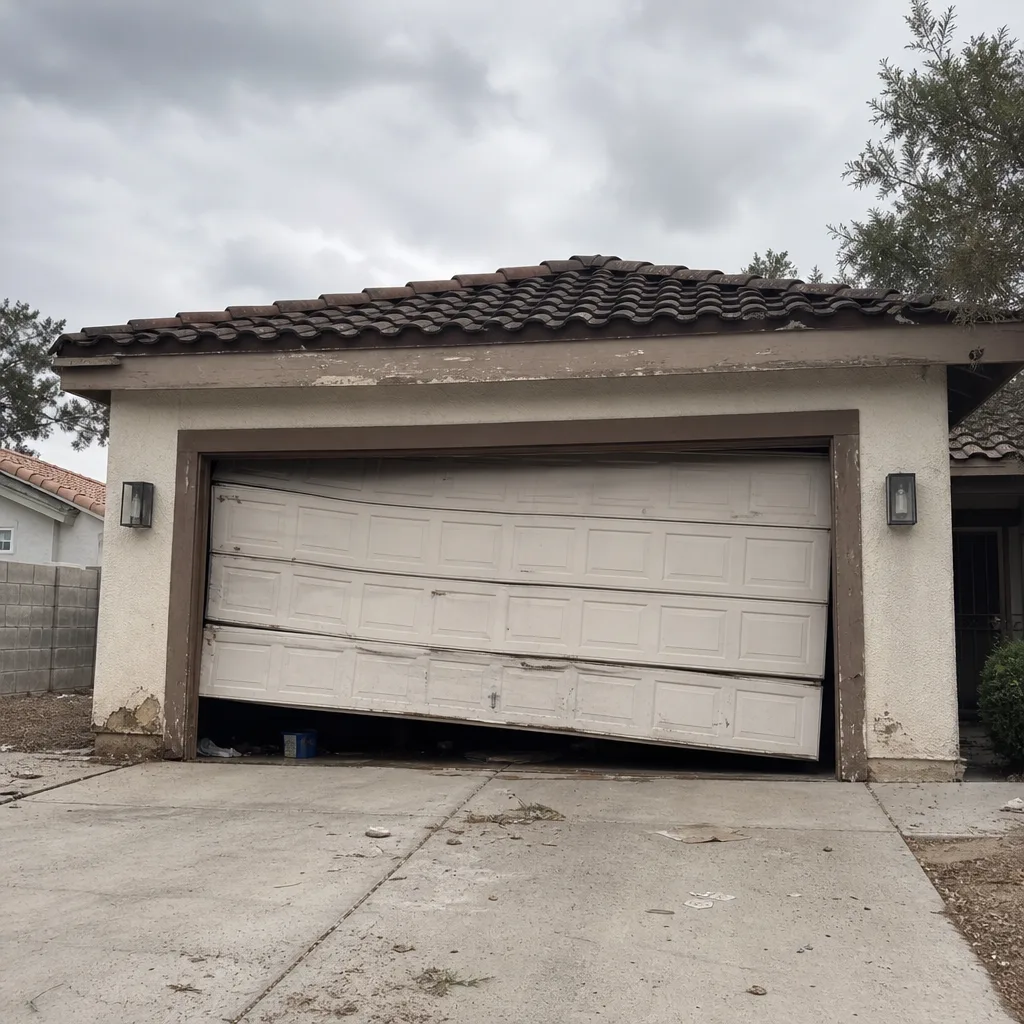 Before
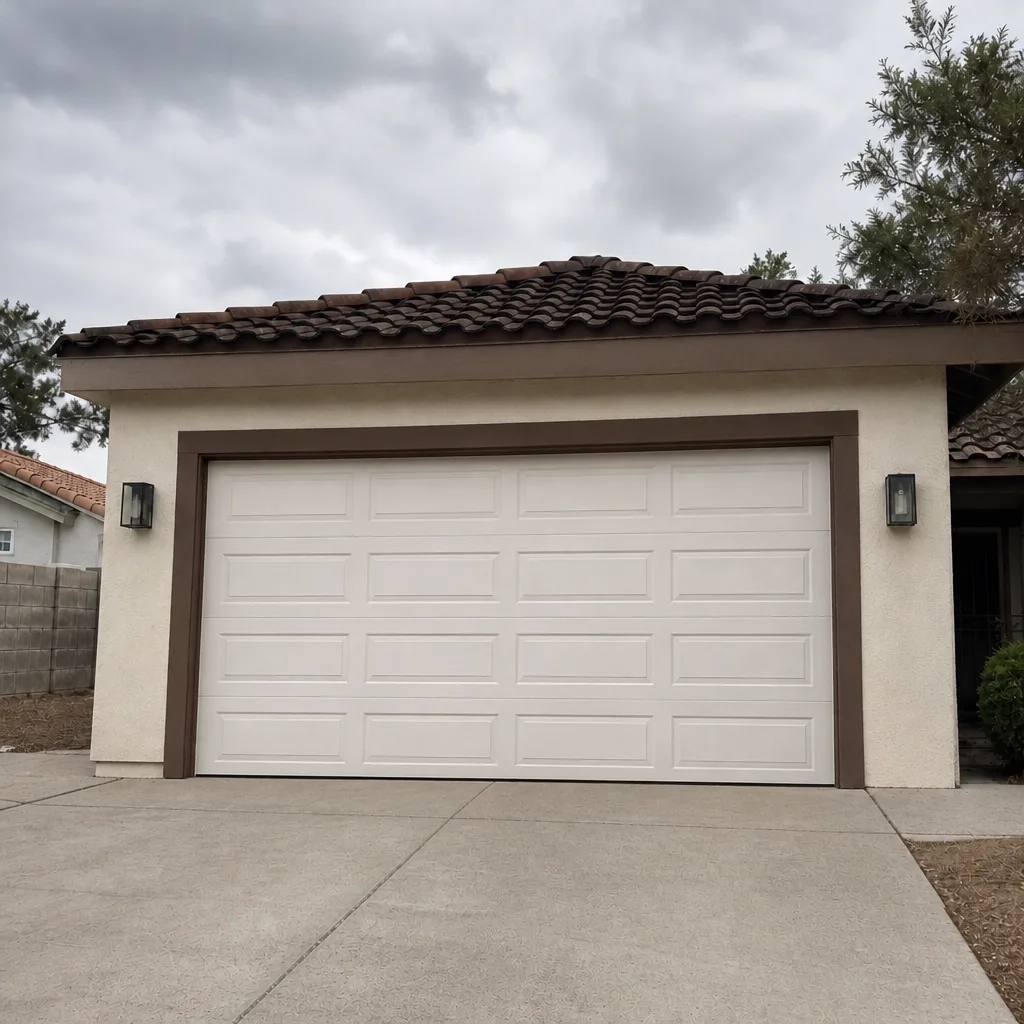 After
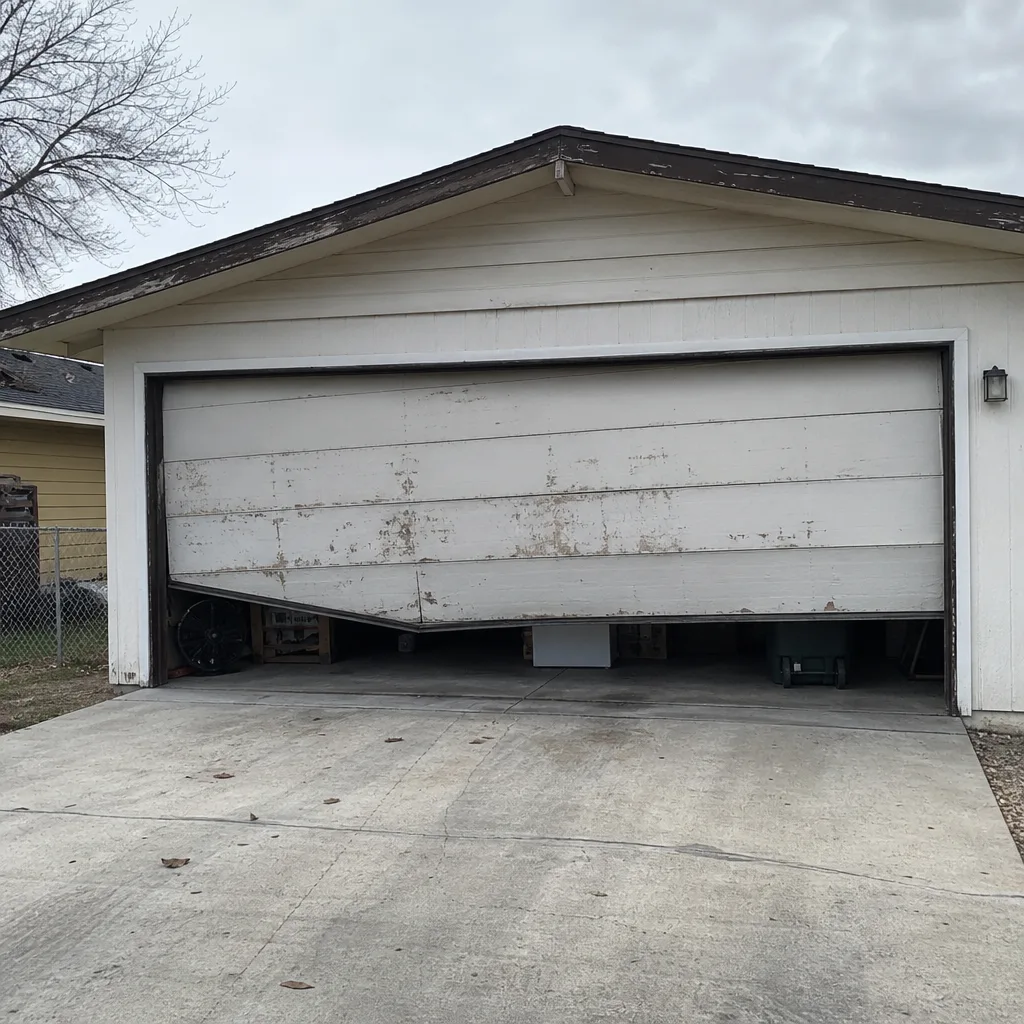 Before
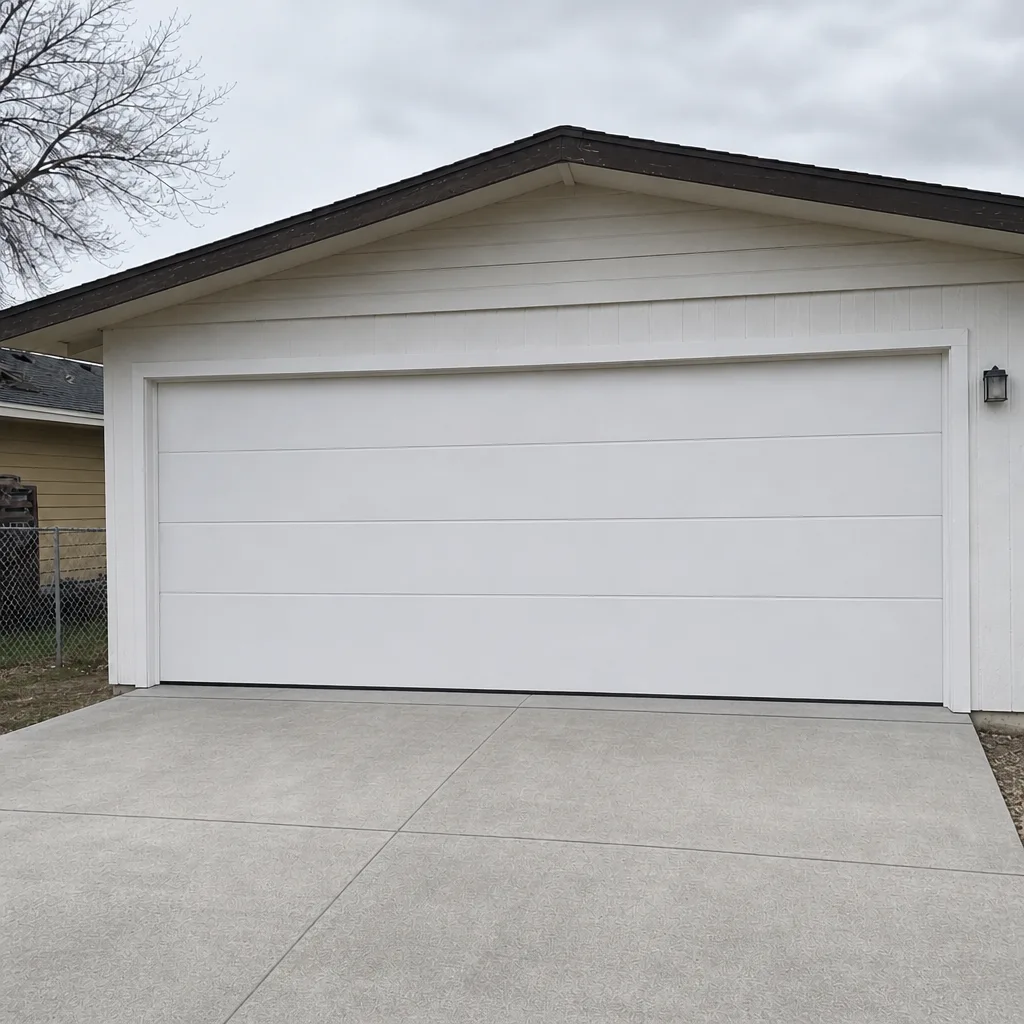 After
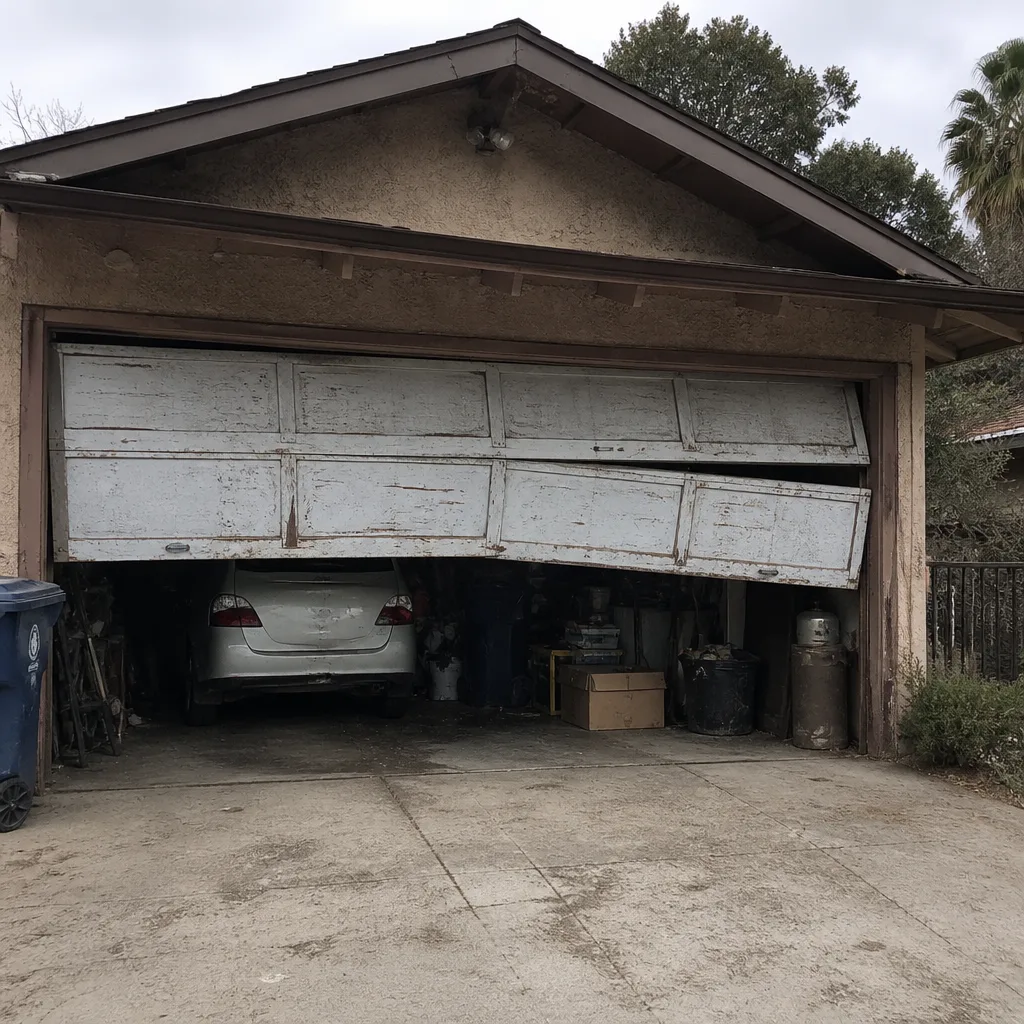 Before
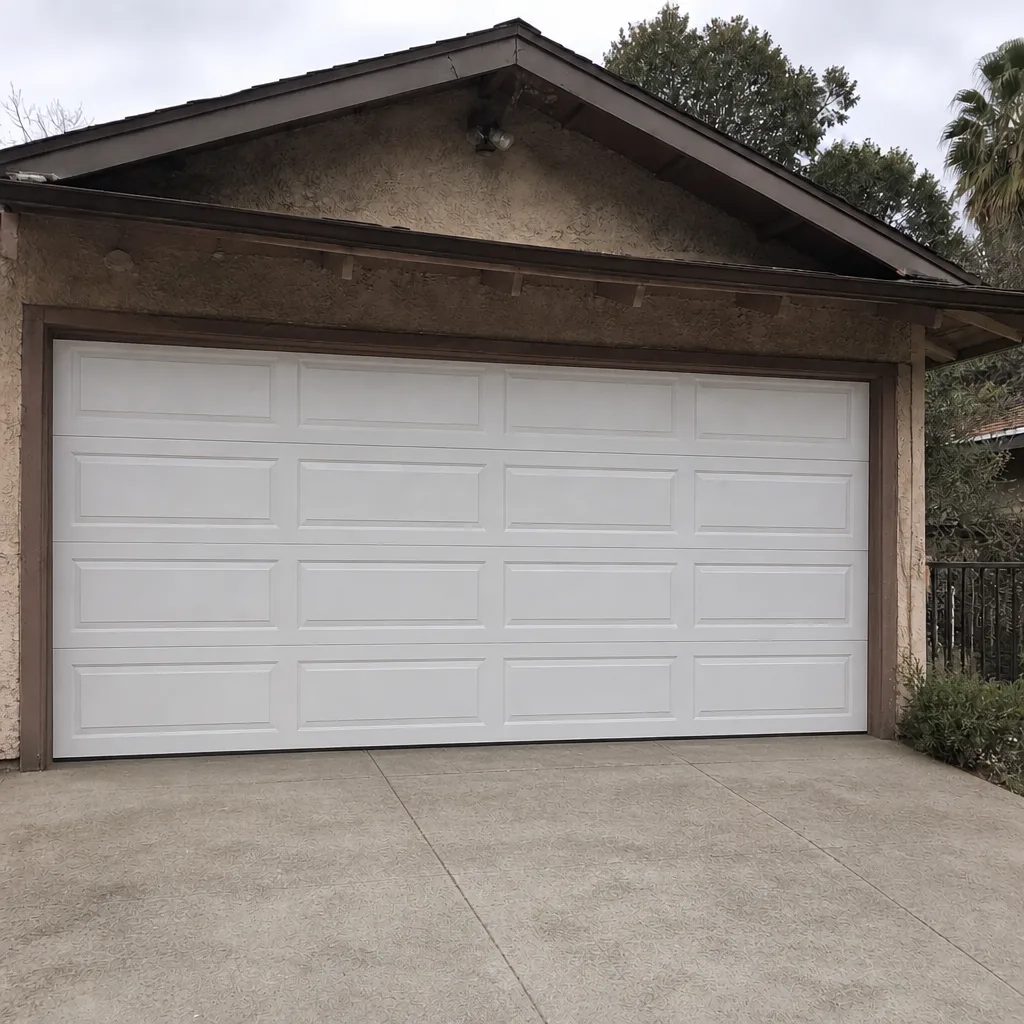 After
When to Call a Professional
Call a professional when the door fails any safety test, when you hear a snap or bang from the garage, when the door binds or comes off its track, when a spring shows a gap or stretches, or when reversing and sensor problems persist after cleaning the lenses. Also call if you simply can’t tell whether a noise or stiffness is normal; the cost of a look is small next to the cost of waiting. Garage Door Paradise offers free estimates in Paradise, and our technicians have up to 11 years of experience. Call (855) 914-8765. We answer 24/7. Fast dispatch from 7am to 7pm, Sunday through Friday.
Frequently Asked Questions
The most common signs here are a door that runs slowly or noisily on a cool morning, UV cracking and chalking on panels and seals, dusty photo-eye lenses causing intermittent reversing, spring sounds or visible gaps, and a door that opens but no longer reverses when it should. Any of these is worth a look before it becomes a breakdown.
Not necessarily. Metal expands in the heat, and mild slowdown on a hot afternoon that clears by morning is usually thermal. The real test is a cool morning: if the door is slow then, the heat isn’t the cause. Call (855) 914-8765 for a free estimate if you’re unsure which you have.
Dust on the photo-eye sensor lenses is the usual culprit in this climate. A thin film on either lens can scatter the beam and trigger a false reversal. Wipe the lenses with a soft cloth first. If reversing continues, the sensor or alignment needs a professional check.
Listen for a twang, ping, or click with each cycle, and look from a safe distance for a gap or stretching on a torsion spring. A door that feels heavy by hand or drops fast is another sign. Never handle a spring yourself; high-tension springs store enough energy to cause serious injury.
Opening well doesn’t mean it’s safe. The safety functions (the reverse on obstruction and the force settings) can fail while the door still opens and closes normally. Run the broom-handle and paper-towel tests. A door that keeps closing past an obstruction needs service before it’s used again.
We service the major brands, including LiftMaster, Chamberlain, Genie, Clopay, Amarr, Wayne Dalton, Craftsman, and Raynor, so you don’t need to know which one you have before you call. For help anywhere in Paradise, call (855) 914-8765. We answer 24/7.
The Bottom Line
The warning signs of a failing garage door split into two groups: the universal ones and the desert-specific ones. A door that struggles on a cool morning is never “just the heat.” UV wear on panels and seals, dust on photo-eye lenses, and springs that fatigue faster under thermal cycling are the signs most Paradise homeowners miss because the national checklists don’t mention them. Test the safety functions, watch for UV damage, listen for new noises, and call when something doesn’t fit the pattern. Paying attention now is what keeps a small fix from turning into a snapped spring or a dangerous door. Call (855) 914-8765 for a free estimate. We answer 24/7. Fast dispatch from 7am to 7pm, Sunday through Friday.
Written by the team at Garage Door Paradise.